
Building a genuinely great wireless home cinema setup in 2026 means juggling sound quality, connectivity, and price without losing sight of what actually matters to your living room. With so many soundbars, speakers, and receivers on the market, it helps to look at how they perform side by side rather than in isolation. This comparison draws on extensive testing to highlight which systems deliver the most convincing surround sound, the smoothest wireless integration, and the best value for money, whether you're kitting out a modest den or a dedicated cinema room.
In short
- The article evaluates home cinema systems based on real-world performance testing, focusing on sound quality, wireless connectivity, and overall value.
- The Vizio 2.1 Soundbar is highlighted as a top budget choice, while the Klipsch Reference Cinema System 5.1.4 is recommended for immersive surround sound.
- Premium options like the Bose Smart Ultra Soundbar offer superior audio for larger rooms, although they require a significantly higher financial investment.
- Dolby Atmos and DTS technologies are essential for creating an enveloping, cinema-like experience by adding vertical audio dimensions.
- Proper installation, including correct speaker positioning and room calibration, is crucial for maximizing the performance of any home audio system.
- Wireless integration and multi-room compatibility are key considerations for modern setups, with brands like Sonos offering ease of use through smartphone apps and voice control.
Evaluating premium wireless home cinema systems: sound quality and performance analysis
When comparing home theatre systems, the differences between budget and premium options become obvious the moment you press play. CNET Labs, which brings more than twenty-five years of testing experience and a team of twenty-three product reviewers working across a fifteen-thousand-square-foot facility, has put a wide range of soundbars, speakers, and receivers through their paces using genuine movies and music tracks rather than synthetic benchmarks. This real-world approach reveals how systems behave under the kind of content people actually watch and listen to at home.
Comparing sound bars, subwoofers, and satellite speakers across leading brands
Among the standout performers, the Vizio 2.1 Soundbar, known as the SV210M, earns its reputation as the best budget soundbar, priced at one hundred and forty pounds and scoring an impressive 8.5 rating. For those wanting dedicated bookshelf speakers, the Elac Debut 2.0 B6.2 also achieves an 8.5 rating at three hundred and twenty-nine pounds, proving that excellent sound doesn't always demand a huge outlay. Meanwhile, the Klipsch Reference Cinema System 5.1.4 stands out as the best surround-sound package, delivering immersive audio with a 8.4 rating for five hundred and forty-nine pounds. At the premium end, the Bose Smart Ultra Soundbar commands nearly a thousand pounds but justifies its price with refined, room-filling sound that suits larger spaces. Other systems worth mentioning during testing include the Sony STR-AN1000 and the Yamaha RX-A4A receiver, both of which bring their own strengths to multi-channel setups.

Dolby atmos and dts technology: understanding immersive audio capabilities
No modern comparison would be complete without discussing Dolby Atmos, the technology that adds height and depth to sound by directing audio above and around the listener rather than simply from left to right. Systems that support Atmos, alongside DTS formats, create a noticeably more enveloping cinema experience, particularly for action films and orchestral scores. Ty Pendlebury, an expert with extensive experience covering TVs and home entertainment, has consistently highlighted how Atmos-capable setups transform ordinary viewing into something closer to a genuine cinema outing. When shopping, it's worth checking that both the soundbar or receiver and your source content actually support these formats, since mismatched equipment can leave the extra investment underused.
Connectivity and Installation: HDMI ARC, Bluetooth, and Multi-Room Setup Essentials
Sound quality only tells half the story. How a system connects to your television, other speakers, and your existing devices often determines whether the whole setup feels effortless or frustrating. Connectivity options such as HDMI ARC and Bluetooth have become standard expectations, allowing a single cable or a quick pairing process to link a soundbar directly to a television without a tangle of wires.
Wireless Configuration and Integration for Seamless Home Cinema Experience
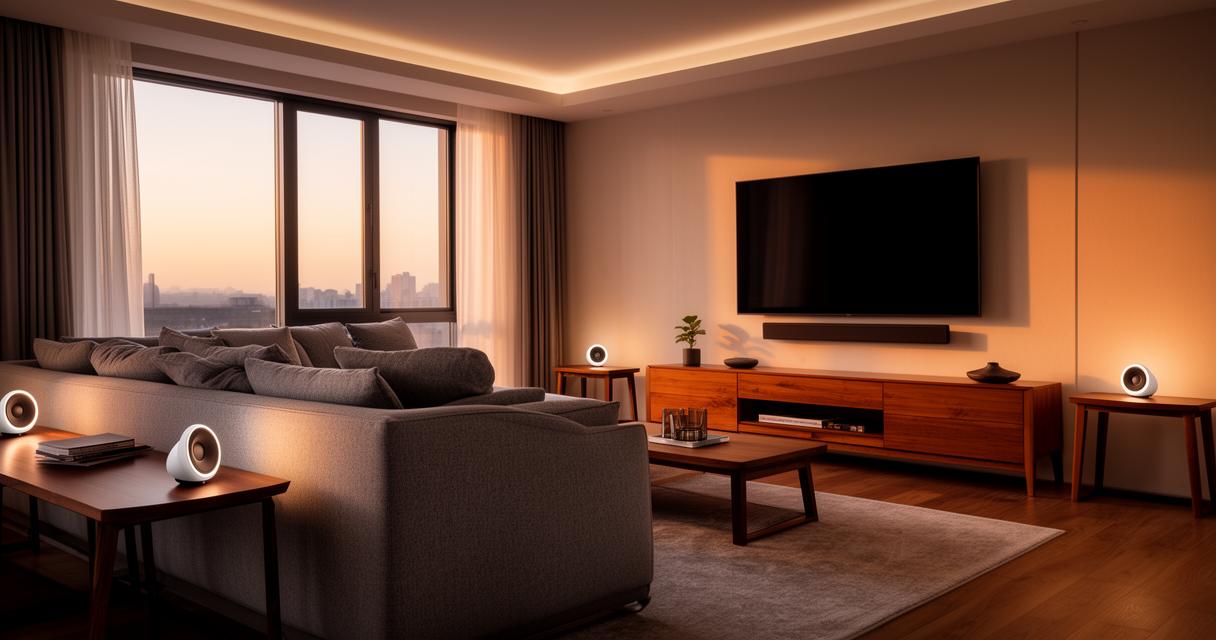
Wireless speakers have made multi-room audio far more accessible than it once was, letting music or film audio play across different rooms either simultaneously or independently. These systems can typically be controlled via a smartphone app or through voice assistants, which adds a layer of convenience that wired setups simply can't match. For anyone building a home cinema around a central hub, checking that speakers, subwoofers, and receivers all speak the same wireless language avoids compatibility headaches further down the line.

Practical installation guidance for various audio equipment configurations
Installation needn't be daunting, even for those unfamiliar with home cinema kit. Positioning satellite speakers at ear height, keeping the subwoofer away from corners to reduce boominess, and running a quick calibration using the receiver's built-in microphone can make a surprising difference to overall performance. For anyone assembling a 5.1.4 setup similar to the Klipsch Reference Cinema System, careful attention to ceiling or upward-firing speaker placement is essential to get the most from Atmos height channels.
Price Versus Value: Finding the Best Wireless Home Cinema Setup for Your Budget
Basic home theatre systems tend to start around five hundred pounds, while higher-end setups can comfortably exceed one thousand pounds once you factor in receivers, additional speakers, and subwoofers. The key is matching spend to genuine need rather than chasing every available feature.
Brand-by-brand assessment: sonos, klipsch, yamaha, and focal performance reviews
Sonos continues to impress with excellent audio quality and remarkably simple setup, though it comes at a premium price that won't suit every budget. For pure multi-room music rather than cinema, the Sonos Era 100 at one hundred and seventy-nine pounds offers a strong entry point, while the Sonos Era 300 and Sonos Move 2, both priced around four hundred pounds, cater to those wanting richer sound or portability. Apple's HomePod 2 and HomePod mini work brilliantly for anyone embedded in the Apple ecosystem thanks to AirPlay 2 support, whilst Amazon's Echo Dot and Echo Studio provide more budget-friendly alternatives, albeit with some compromises when it comes to true multi-room performance. Bose, represented by the Home Speaker 500 and Portable Smart Speaker, delivers strong audio quality but offers a narrower range of devices compared with rivals. Klipsch and Yamaha, meanwhile, remain go-to names for dedicated home cinema rather than casual music streaming, and Focal continues to appeal to those chasing audiophile-grade detail.
Essential Components and Investment Priorities for Multi-Room Audio Excellence
When deciding where to focus your budget, prioritise the components that affect daily enjoyment most: a capable soundbar or receiver, a subwoofer that integrates smoothly rather than overpowering dialogue, and speakers that support the connectivity standards you already rely on. Buyers should weigh up brand ecosystem, portability, voice assistant compatibility, and privacy features alongside straightforward cost, since the right combination varies enormously depending on whether the priority is cinematic immersion or flexible multi-room music around the house.